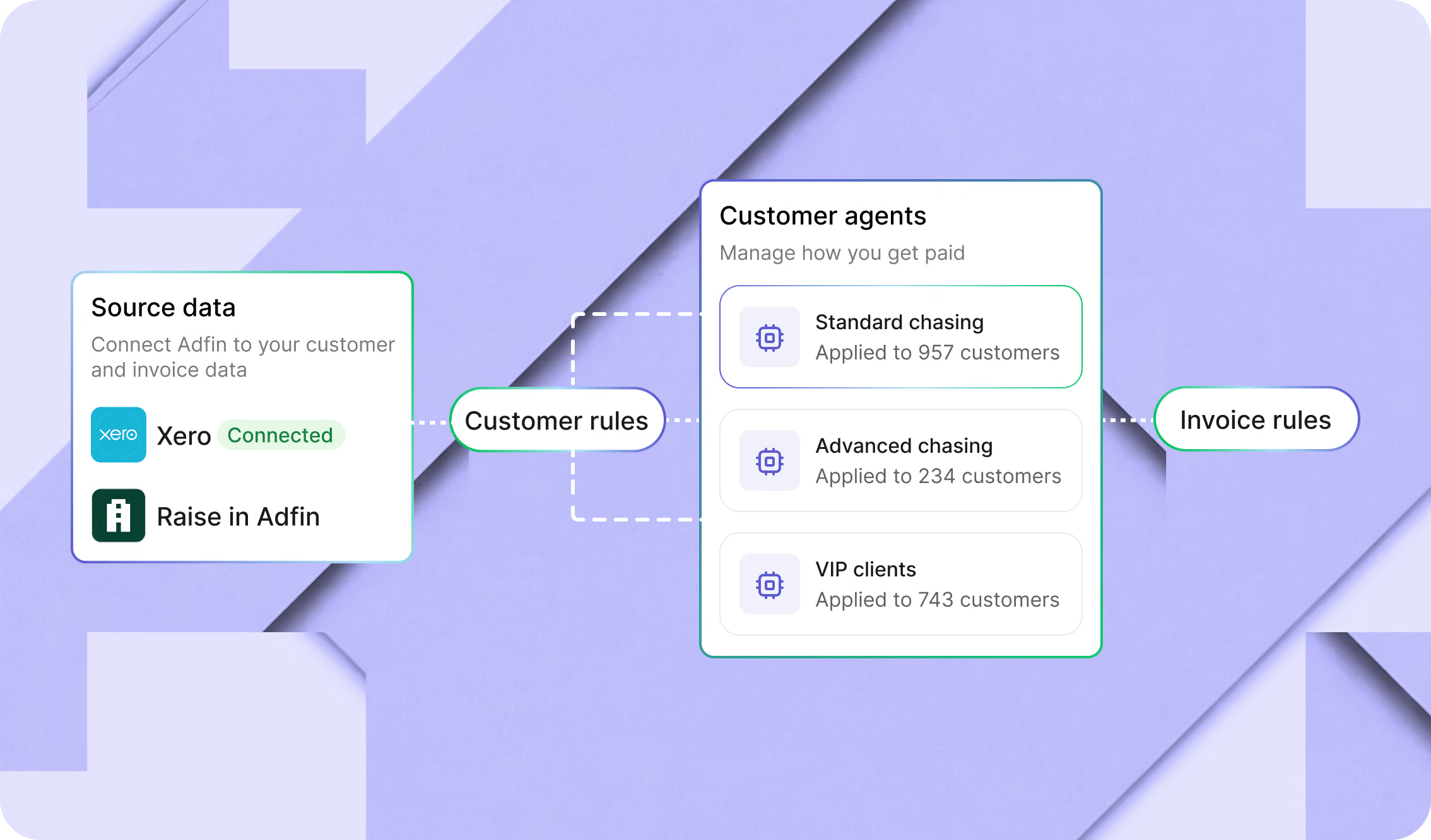
Today we're launching customer agents in Adfin: AI that helps you automate who to chase, when to follow up, and how to handle each payment situation. Agents reduce the tedious manual work of getting paid and credit control, while leaving the judgement calls that protect customer relationships firmly in your hands.
Credit control is, at its core, a decision problem. Every day, finance teams make judgement calls: which customers to prioritise, when to follow up, how to approach each situation, when to escalate.
Those decisions depend on constantly changing data. Invoices age. Payment patterns shift. Customer behaviour changes by season, invoice size, and relationship history. In most businesses, those decisions are still made manually, inconsistently, and without full context.
The result: delayed payments, fragmented processes, and a lot of time spent managing the process rather than getting paid.
For a decade, the answer has been to automate tasks through software: day 3 reminder, day 7 follow-up, day 14 escalation. This saved time and stopped invoices slipping through the cracks. But software can't fix the underlying problem.
Getting paid is not a uniform process. Different customers respond to different approaches. Some pay within hours of a text. Others ignore email but reply immediately to a phone call. Some always go quiet in December. Some pay small invoices promptly and let large ones drift.
When software treats every customer the same, you lose the nuances that actually get you paid. The key to getting paid is combining judgement and execution at scale.
Introducing customer agents
Customer agents work differently. Instead of you setting up a fixed sequence, you set the rules of engagement: what channels the agent can use, how persistent it should be, what it's allowed to do on your behalf, and where you want a human in the loop. Within those rules, the agent looks at each customer and decides the next best action.
The agent optimises how and when it chases, send account statements when a customer goes quiet, apply surcharges to offset payment processing costs, retry failed payment methods, and apply statutory late fees when invoices go overdue. Each is configured once and applied automatically when relevant.
Today, we're launching two new capabilities.
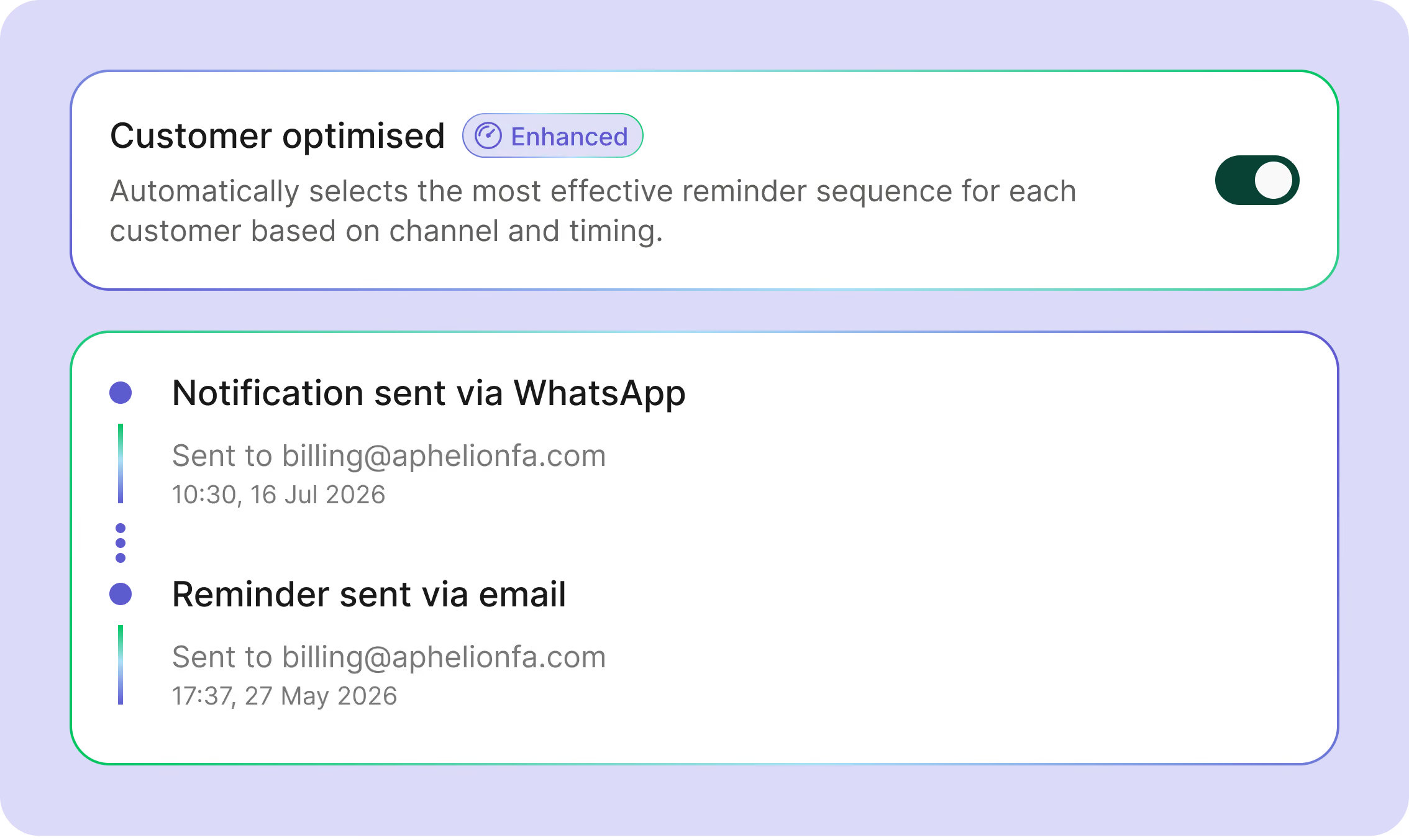
Optimised reminders for each customer
A customer who consistently pays after a Tuesday morning email shouldn't get a Friday afternoon text. A customer who has ignored reminders for two weeks shouldn't get the same nudge as someone who's a day late.
The agent learns which combinations of timing, channel, and cadence work for each customer, then adapts as new payment data comes in. New customers begin on a standard sequence. Over time, the sequence changes based on what actually gets invoices paid.
Automated late fees
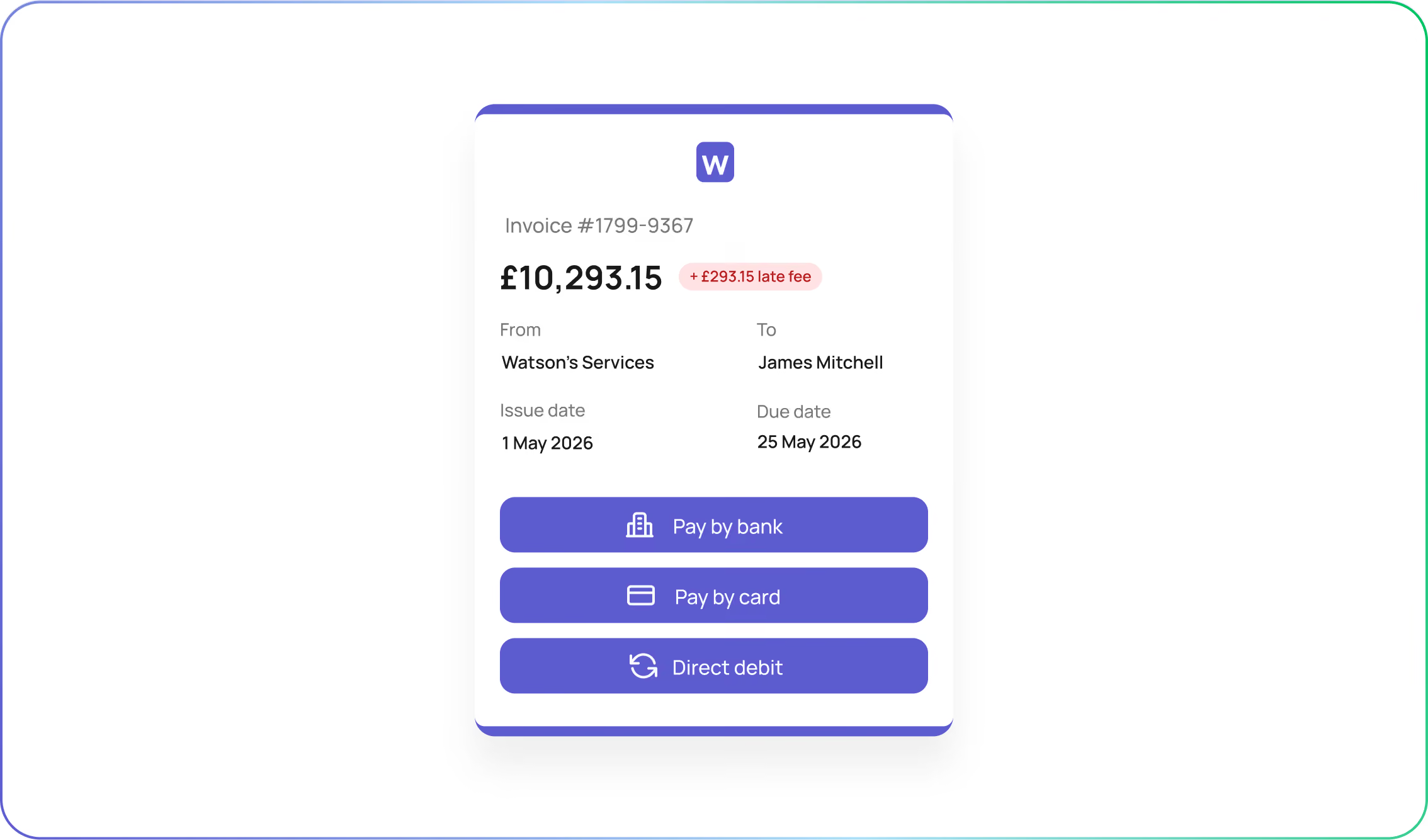
The agent applies statutory interest and fixed compensation to overdue invoices, calculated from the original due date. Payment links update as interest accrues. Reconciliation back into your accounting software happens automatically. Grace periods to give customers a limited window to pay before a late fee is enforced.
The right to charge late payment interest has existed in UK law since 1998. Most businesses simply don't enforce it because the admin overhead is too high. Like reminders, the barrier was never legality. It was operational overhead.
Early results
Of course, our customers always say this better than we can:
“We set up our customer agent with automated late fees and optimised chasing, and it made a difference straight away. We’d been chasing one overdue payment for about four weeks with email reminders and getting nowhere. The agent then switched to a text message, added the late fee, and the customer paid almost immediately.
We’ve wanted to be a bit smarter about how we chase payments and use late fees for a while, but the admin always made it hard to justify. Now it just happens in the background — the right reminder goes out through the right channel at the right time, and the reconciliation back to Xero is handled automatically.”
Paul Barnes, Managing Director, Cloud Accounting Support Services
What comes next
Routing rules will automatically assign new customers to the right agent. Internal approval flows will add human checkpoints for sensitive actions.
The underlying model is the same across all of these: you define what good looks like, you set the constraints, the agent handles the execution. Workflows were always a means to an end. Customer agents are closer to the end itself.