Every accountant has felt the pain of late payments, manual chasing, and the awkward “just bumping this to the top of your inbox” emails. Direct debit is brilliant at fixing much of this - it means less chasing, more predictable payments and better cash flow.
At the same time, as with any payment method, there’s always a few things to watch out for (direct debit has been around for 30+ years after all!). We’ll dig into what accountants should bear in mind when getting paid with direct debit - and what we’ve built at Adfin to make it even better.
Why direct debit is great for accountants
Reliable cash flow. Once a client signs a mandate, collections run like clockwork. Invoices get scheduled for collection on the due date (wherever possible), so you know when the money will land in your bank account. Jonathan Gaunt, MD at FD Works and co-founder at Socket shared more on this here.
Better client experience. Clients don’t need to remember to pay every month. It’s one quick mandate, then they’re done - and they still get clear notice before each collection. Direct debit also helps your clients’ cash flow as well as your own - breaking down chunky fees like annual accounts into manageable instalments.
Flexible amounts. Once a mandate is signed, you can invoice for varying amounts. This makes direct debit great for things like software subscriptions - if the price changes, all you do is update the invoice (and no need for your client to do anything at all). We wrote a whole blog post about direct debit for software subscriptions here.
What to watch out for (and how Adfin helps)
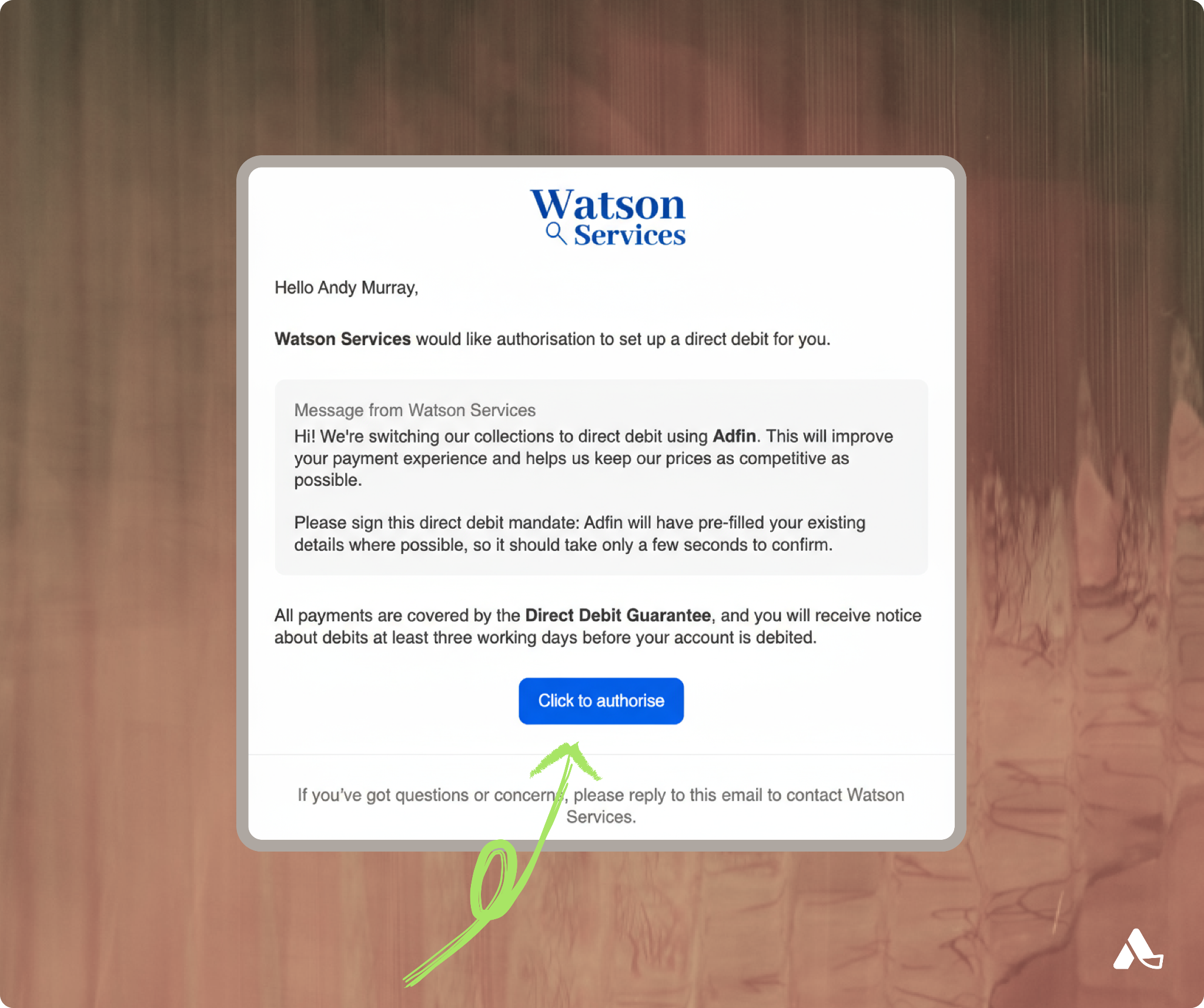
Your client needs to sign a direct debit mandate. This authorises you to take payments from their account. Lots of accounting firms ask clients to sign a mandate alongside the proposal when they start working together.
How Adfin helps: Adfin enables you to bulk‑send mandate requests and track who’s signed them. You can include a custom message along with your mandate request, to explain in your own words to clients what’s happening. We’ve even built integrations with leading practice management tools like Engager and Socket, so you can send direct debits directly from those platforms. Already using direct debit with another provider, and worried about asking your clients to sign a new mandate? Don’t worry - we’ve got that covered too (read more below!)
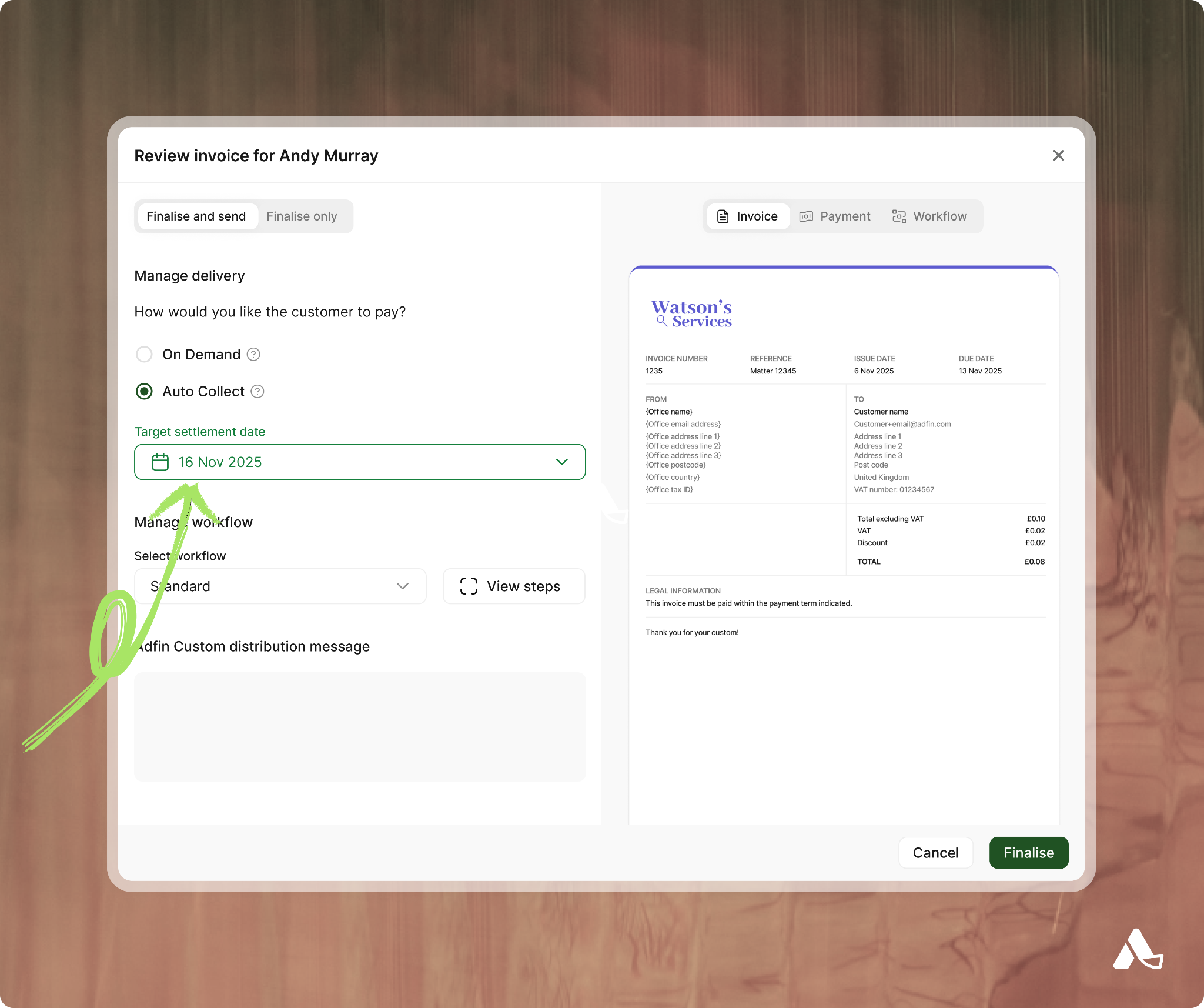
Collection timings are set by the scheme. Direct debit isn’t instant; clients get advance notice and funds settle a few working days after the due date.
How Adfin helps: If you’re not sure when to set your due date so money lands when it needs to, you can choose a target settlement date instead in Adfin, and we’ll work backwards to when to debit your client.
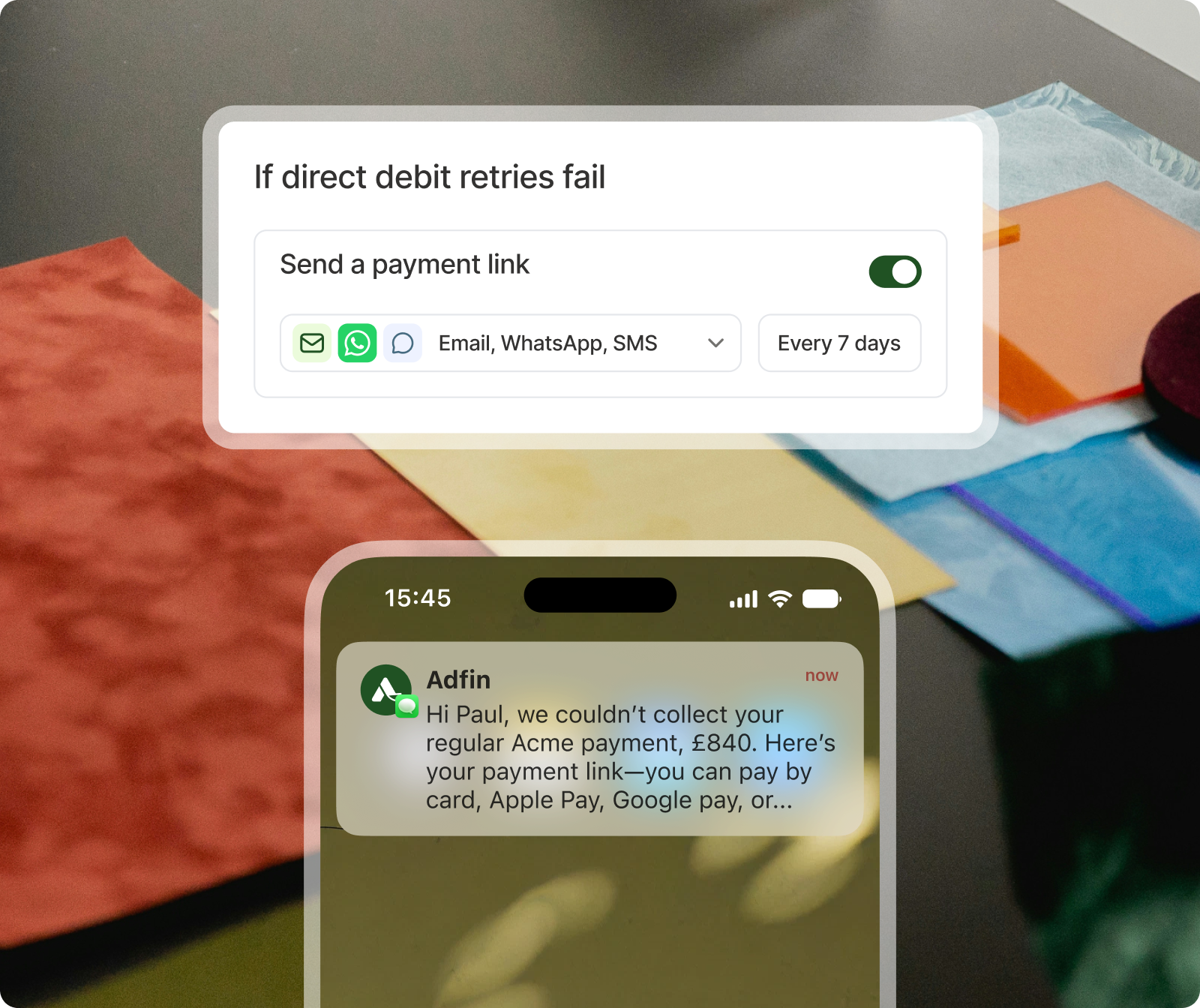
Occasional payment failures. Insufficient funds or account issues do happen.
How Adfin helps: Adfin doesn’t charge for failed payments (unlike some other providers). If you don’t get paid, nor do we! If a payment does fail, we make sure you have a fallback - choose how many times you want to retry, or switch automatically to an instant option (card, pay by bank, Apple Pay, Google Pay).
Reconciling bulk settlement. Keeping track of your direct debit payments can be difficult when they are settled in bulk: since direct debit payments are settled in a single payout from your provider, it can be difficult to reconcile this to invoices in your accounting software.
How Adfin helps: Adfin integrates to Xero and QuickBooks, and will automatically mark invoices as paid when we settle funds to you. We also provide you a granular breakdown by payout of exactly which invoices were paid, so you'll never have to spend time figuring out what was or wasn't paid.
Client recognition matters. If a client doesn’t recognise your payments on their bank statement, they’re more likely to query these, or even raise a chargeback with their bank.
How Adfin helps: With Adfin Custom, your business name appears on the bank statement to help clients recgonise you at a glance, reducing the risk of disputes.
We asked Nicola from Accounts and Tax Made Easy what drew her to Adfin;
All my clients were on a pay-as-you-go basis, especially for self-assessment. I’d have to chase and chase, not hear anything, send an invoice, and say, “Until you pay, I’m not doing it.” It was a bit of a pain. I wanted to switch to direct debits.
I tried GoCardless but only managed to get about three clients on it - it just wasn’t easy to set up. I didn’t find it intuitive. Then I found out about Adfin and moved all my self-assessment clients onto monthly direct debits. Now I do the invoices in Xero, and Adfin sends them out. It’s just so much easier. They even chase when the mandate needs signing for new clients!
Already using another direct debit provider?
Like what you’re hearing about Adfin, but already using someone else? It’s easier than you think - we’ve built products to migrate over all your invoices and mandates smoothly. With our mandate migration offering, clients don’t even need to sign new mandates - we’ll move them from your old provider with no interruptions to collections and no paperwork.
Get started with Adfin direct debit
Direct debit takes the friction out of getting paid, but the details matter. With Adfin, you get the reliability of direct debit with the added safety net of customised retries, instant fallbacks, and clear client comms - all tied into your existing accounting tools.
Want to give it a try? Book a demo or chat with our team to learn more.