£112 billion is currently locked up in late payments to the UK's smallest businesses. 14,000 of them close every year because of it. Every one of those businesses has had the legal right, since 1998, to charge statutory interest at the Bank of England base rate plus 8%, plus a fixed compensation fee, from the day payment goes overdue. No contractual clause required. Owed automatically.
Almost no small business has ever exercised this right. Until now, the cost of charging almost never justified the effort.
The Small Business Protections (Late Payments) Bill, introduced in the King's Speech on 13 May, changes the underlying economics. It's the largest crackdown on late payment in over 25 years. Payment terms are capped at 60 days. The statutory rate becomes mandatory, closing the contractual workaround that large buyers have used to push effective terms out indefinitely. The Small Business Commissioner gets investigation and enforcement powers, with fines reaching tens of millions for persistent offenders. Large companies with a track record of late payment will have to report on it at board level.
The Bill creates the entitlement. The practical question is what it takes to use it.
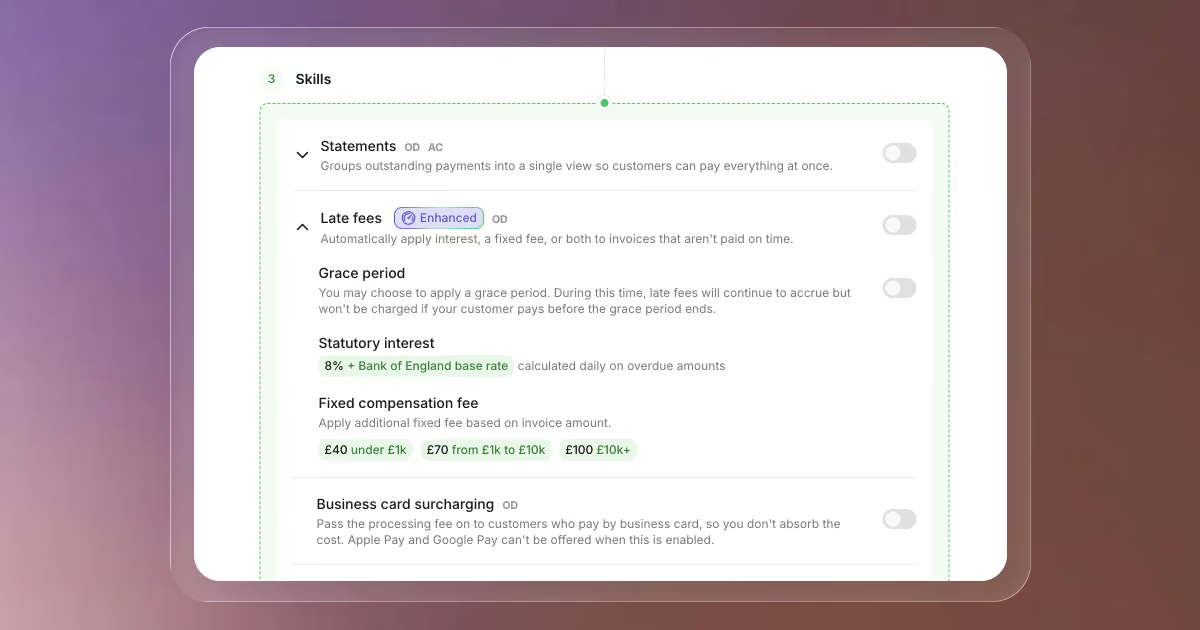
To charge statutory interest correctly, a supplier has to calculate from the original due date, not the date they got around to it, using the Bank of England rate that applied then. They have to apply the right fixed compensation tier: £40, £70, or £100 depending on invoice value. They have to notify the customer formally. If the rate changes before payment arrives, they have to recalculate. When the money comes in, they have to reconcile it correctly so the accounting stays clean. And underneath all of that, they have to judge, invoice by invoice and customer by customer, whether the relationship can withstand it.
For a business with a handful of late payers and a two-person finance function, doing this manually has almost never added up. The Bill removes the legal obstacles. It doesn't remove the operational ones.
This is where technology comes in. For small businesses to actually charge statutory interest under the new Bill, four things need to happen automatically.
The interest needs to calculate itself, from the original due date, using the right Bank of England rate, including for invoices that were already overdue before anything was set up. The rate needs to be monitored daily, so the figure is always current without anyone checking. The customer needs to see the up-to-date total every time they open their payment link, so no manual chase is required. And the accounting entry needs to post itself, so reconciliation stays clean.
What stays with the business is the judgment: which customers to enable this for, what grace period to allow, when to waive a fee. Everything else stops being a job.
This is what Adfin now does. You set the rules per customer; Adfin handles the calculation, application, reminders, and accounting sync. The Bill provides the entitlement. Adfin makes it usable.
The Small Business Protections Bill is the most significant shift in late payment in a generation. The businesses that act on it will be the ones who can do so without the admin swallowing the benefit, and that's now a solvable problem.