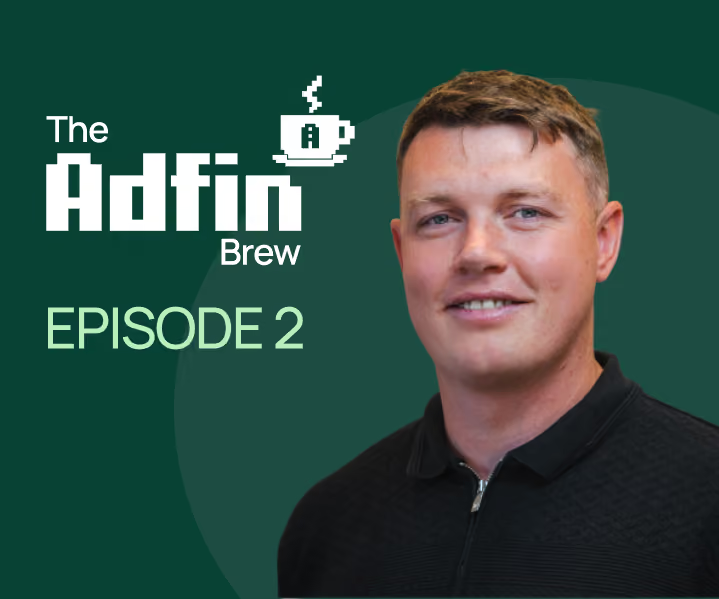
We recently sat down with Tom Bickle, director of Accountants Therapy, the community for accountants, bookkeepers and tax advisers, alongside Andy Brown from our sales team. Tom tested the Cash MOT before launch and now runs it with most of his clients, so we talked about how he uses it and what it's changed. Here are the key insights from the conversation.
In short
- The Cash MOT is a free cash flow health check that accountants run on a client's Xero or QuickBooks data, benchmarked against businesses in the same industry.
- It takes seconds to produce, so it can be run live in a client meeting.
- Red, amber and green results give the client something specific to fix, and a baseline to review a few months later.
- It opens conversations about bookkeeping, management accounts and credit control that are otherwise hard to start.
What the Cash MOT checks
You start an MOT from a client's record in Adfin, choose their industry and connect their accounting software for 30 minutes. Adfin reads the data and returns a short report covering the share of invoices paid late, average days to get paid, debtor days, money written off or stuck beyond 120 days, and what the client could recover with automated chasing and late fees.
What are debtor days?
Debtor days are the average number of days it takes customers to pay once they've been invoiced. The higher the number, the more cash is tied up in unpaid invoices.
Each measure is compared with businesses in the same industry, and the overall result is graded like a car MOT, from a pass to a major defect. Most small business owners never look at these numbers because they're busy running the business, which is exactly why it helps when their accountant brings them up.
A quick check can uncover a process problem
One of Tom's first test clients was, fittingly, a car mechanic. The report came back mostly red, including a high share of invoices paid late, which seemed odd. Customers usually pay when they collect the car.
It turned out the mechanic liked to let customers drive off and report back after a couple of days. If nothing was wrong, he'd raise the invoice then. Once that was on the table, they changed the process so payment was taken at collection. The conversation led to a two-hour meeting about the rest of their systems, and they now have documented procedures in place.
Fast enough to run in the meeting
Logging in with two-factor authentication takes longer than producing the report. That speed changes how it gets used. It isn't a piece of analysis you schedule. It's something you can pull up while the client is sitting with you.
Tom checked the figures against his own spreadsheet before relying on them. It took him 20 minutes, and he was happy with the results.
A baseline gives clients something to work towards
In a management accounts meeting with a construction client, Tom pulled up the MOT in place of his usual ratio spreadsheet. It flagged late payers, including some paying after six months. The client left with a list of actions, and they agreed to rerun it in three months and compare.
That gives the client a clear target and the next meeting a ready-made agenda. Tom says clients he's used it with are already seeing their cash flow improve.
It's worth running on your own practice first
Tom's own results were mixed. His average days to get paid came out at nine, which is 71% below the Adfin benchmark. But the share of his invoices paid late was higher than the benchmark, which made him ask whether he was letting clients who don't pay by direct debit off the hook.
Running it on your own practice shows you what clients will see, and it can surface a few actions of your own. Tom suggested an accountability club, where practices rerun their MOT each month and compare progress.
A natural way into advisory work
Most business owners dislike chasing money, and your clients go through the same frustration you do. That makes late payment a real pain point, and a place where you can help.
"I'm really anti the expression, you know, it's only business. I don't agree with it. I think business is incredibly personal."
Tom Bickle, Accountants Therapy
A client who struggles to collect might be leaving their bookkeeping until month end, which opens a conversation about doing it in real time, and from there about management accounts. Some practices also offer to manage credit control for their clients. If the client says no, you move on, but the conversation has started from evidence.
What is credit control as a service?
It's when an accountancy practice manages a client's invoicing follow-up and payment collection for them, usually as a paid add-on to their existing services.
Who to run it with
Starting with high-risk sectors makes sense. Construction is an obvious one, where 90-day terms are common, along with simple buy-and-sell businesses where a few changes can make a quick difference. Once it's familiar, it's easy to offer to anyone on Xero or QuickBooks who phones or emails. Five minutes per client is a small investment for the conversations it can lead to.
A few things you could try
- Run the Cash MOT on your own practice first, so you know what clients will see.
- Pick two clients in high-risk sectors and run it in your next meeting with each.
- Agree one or two actions from the red items, and book a rerun in three months.
- Note which services each conversation points to, such as more frequent bookkeeping or management accounts.
Common questions
What is a Cash MOT?
A Cash MOT is a free cash flow health check from Adfin. It reads a business's accounting data and benchmarks how quickly it gets paid against similar businesses, graded from pass to major defect.
Which accounting software does it work with?
Xero and QuickBooks. The accountant connects the client's account for 30 minutes while the report is produced.
What does the Cash MOT measure?
The share of invoices paid late, average days to get paid, debtor days, money written off or outstanding beyond 120 days, and the potential gain from automated chasing and late fees.
How can accountants use it for advisory work?
It can open conversations in client meetings, set a baseline to review each quarter, and identify clients who'd benefit from more frequent bookkeeping, management accounts or help with credit control.
The full conversation, including a walkthrough of the Cash MOT, is on our YouTube channel.