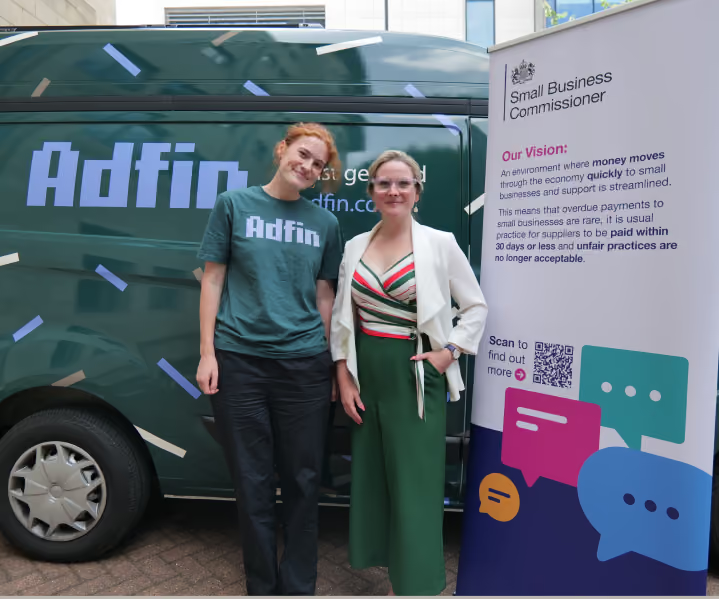
We recently sat down with Dr Ffion Hargood, co-founder of Husu and a former medical doctor, and Corey Haigney from our go-to-market team, to talk about what chasing late payments really costs. Husu measures strain and burnout risk inside businesses, so the conversation covered the human side as much as the financial one. Here are the key insights from the conversation.
In short
- Late payment costs a business twice: once in the cash it's waiting for, and again in the time and attention spent worrying about it and chasing it.
- Most late payments come from friction, such as an invoice sitting in an unmonitored inbox, more often than from a decision not to pay.
- Three process changes make a difference: send invoices where clients will see them, take payment details at onboarding, and apply statutory interest to overdue business invoices.
- Agreeing terms up front and sticking to one process means chasing stops being a fresh, uncomfortable decision every time.
Late payment costs you twice
The financial cost is well known. Corey cited figures showing 65% of UK invoices are paid late, an estimated £138bn tied up in late payments between January and May 2025, according to Sage, and around 44 businesses closing every day as a direct result.
The cost that's harder to see is the strain. There's the uncertainty of not knowing whether a payment will land in time for payroll. There are the interruptions, checking the bank balance and wondering when to chase again, which break concentration on the actual work. And it often spills into home life, through irritability and lost sleep, which affects how productive you are the next day.
Across the businesses Husu works with, roughly one in ten people say they're worried about their personal finances or the business's. Ffion also cited a February 2025 study in which 31% of UK employees said money worries had affected their performance at work.
Most late payments come from friction
Late payment is rarely malicious. The invoice went to a generic inbox nobody checks. It arrived while the client was out with their family and didn't have their card to hand. It was seen, then forgotten.
If that's the cause, the fix is to make paying easier. A WhatsApp message with an Apple Pay or Google Pay link can be paid in two taps, wherever the client is. Some people will always pay late, but you can remove a lot of the reasons the rest do.
Why it gets tolerated for so long
Money is an awkward subject to raise, especially with a client who isn't responding, so it gets put off. People also tend to treat each late payer as a one-off to deal with individually, when it's often a pattern that needs a process.
Most of us also assume people will pay because the work's been done. Late payment has been around so long that many businesses accept it as a fixed cost of trading. Across Adfin customers, 8.7% of invoices are currently paid late, which suggests the national figure doesn't have to be the norm.
Chasing is emotional work as well as admin
Chasing has a practical side and an emotional one. If you raise 600 invoices a month and half go late, that's 300 people to chase, each on different contact details, channels and times of day. If you're uncomfortable chasing, each one also costs some stress, and possibly some guilt that you're not spending that time on client work.
"Late payment isn't just a finance problem with an emotional side effect. It's both at once, but most people only ever treat one half and hope that the other will solve itself."
Corey Haigney, Adfin
Small process changes make the biggest difference
None of these changes are large, which is what makes them worth doing.
- Send the invoice where the client will see it. If they reply on WhatsApp, send it on WhatsApp, with a payment method that takes a couple of taps.
- Make payment part of onboarding. Ask new clients to sign a direct debit mandate or save a card when they sign the contract, so each payment happens without a conversation.
- Charge statutory interest on overdue business invoices. Businesses have been able to do this since 1998, but few do because it's fiddly to calculate.
What is statutory late payment interest?
Under the Late Payment of Commercial Debts (Interest) Act 1998, a business can charge interest on a late invoice to another business at 8% above the Bank of England base rate, plus a fixed sum of £40, £70 or £100 depending on the invoice value. It doesn't apply to invoices sent to individuals.
Late fees tend to work before they're ever charged. One Adfin customer saw average days late fall from around 25 to 0.3 after switching them on. Most of those payments arrived during the grace period, once clients knew a fee was coming.
What is a grace period?
It's a short window after an invoice falls due, often a few days, during which the client can still pay without a late fee being added.
Spotting strain early
Ffion described burnout as having three main parts: mental and physical exhaustion, reduced performance at work, and a sense of disengagement from work that used to matter. The earlier you notice it, the easier it is to act on.
For founders, who carry responsibility for almost everything, it helps to find the single biggest cause of strain and deal with that first. Trying to fix everything at once tends to mean none of the changes stick.
Payment is a good place to apply that. If you have an open conversation about payment at the start, agree the terms, and then stick to the process, both sides know where they stand. You're no longer deciding, invoice by invoice, whether it's worth the awkwardness to chase.
A few things you could try
- Note roughly how much time you or your team spent chasing last month, and when in the day it happened.
- Check where your invoices are going, and ask for a named contact if any go to a generic inbox.
- Add a direct debit or card on file step to your client onboarding.
- Decide whether you'll apply statutory interest to business clients who pay late, and update your terms.
- Notice whether money worries are affecting your sleep or concentration, and pick the one change that would ease them most.
Common questions
Why do customers pay invoices late?
Often because of friction more than intent. The invoice went to an unmonitored inbox, was hard to pay on the go, or was simply forgotten. Making invoices easy to see and quick to pay removes many of those reasons.
How does late payment affect business owners?
Beyond cash flow, it creates uncertainty, repeated interruptions and stress that can affect sleep, concentration and home life. Ffion cited a 2025 study in which 31% of UK employees said money worries had affected their work.
Can I charge interest on a late invoice?
If your client is a business, yes. Under the Late Payment of Commercial Debts (Interest) Act 1998, you can claim interest at 8% above the Bank of England base rate plus a fixed compensation sum. It doesn't apply to invoices sent to individual consumers.
How do I chase payment without damaging the relationship?
Agree payment terms and method at the start, take payment details at onboarding, and use a consistent process so reminders feel routine to the client and to you.